
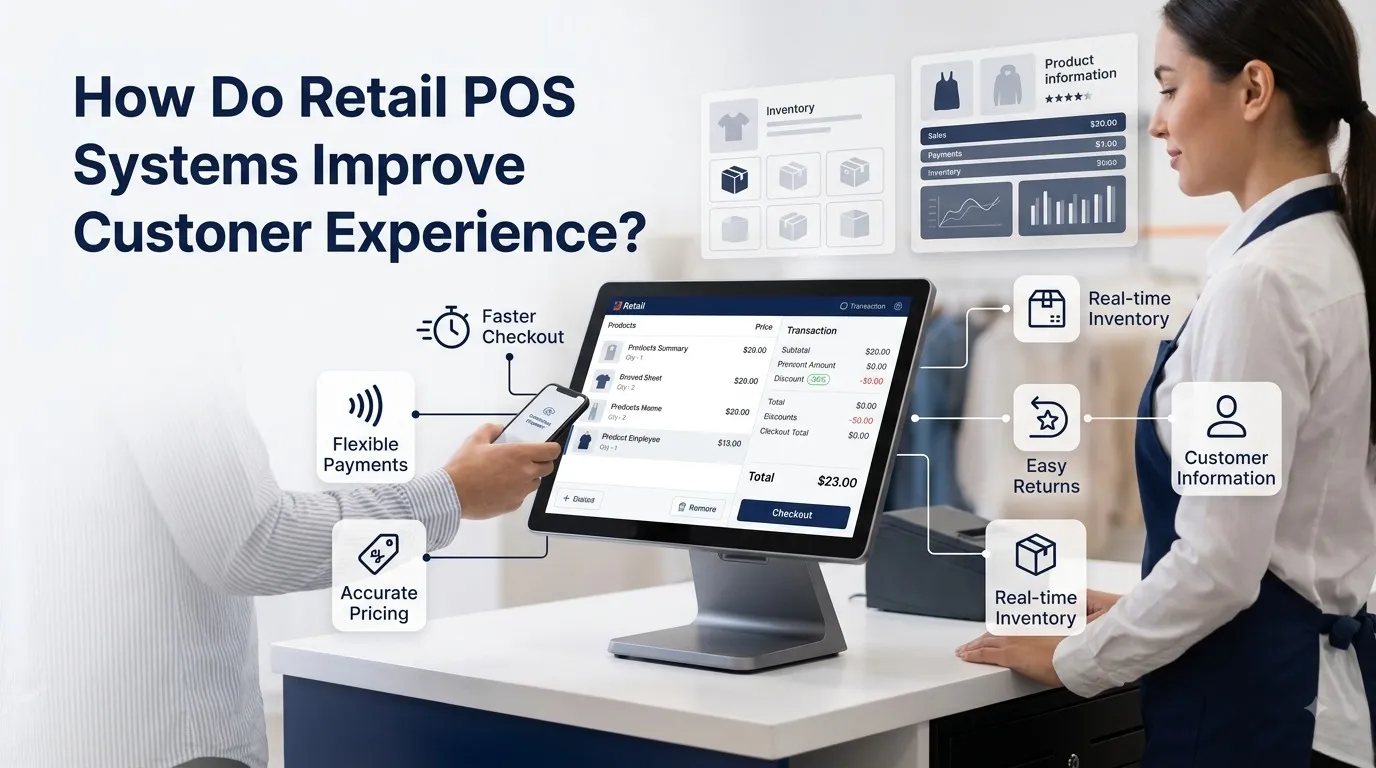
Retail POS systems improve customer experience by making checkout faster, keeping product information accurate, supporting flexible payments, and giving employees quick access to the information they need.
A modern point-of-sale system does more than process transactions. It connects sales, inventory, customer information, payments, and reporting in one system, helping retailers reduce friction at every stage of the buying journey.
For retailers, the goal is simple: customers should be able to find what they need, pay without unnecessary delays, and leave with confidence that their order and payment were handled correctly. USPayrun helps businesses use modern payment and POS solutions to create a more convenient experience for both customers and employees.
What Makes a Retail POS System Important for Customer Experience?
A retail POS system sits at the center of many customer interactions.
When a customer checks out, employees need accurate prices, product information, promotions, payment options, and inventory details. A disconnected system can slow this process down and create mistakes.
A connected POS system brings these functions together.
This means employees spend less time switching between systems and more time helping customers. It also gives retailers a clearer view of transactions, products, and customer activity.
The result is a checkout process that feels organized rather than frustrating.
How Does a POS System Make Checkout Faster?
A retail POS system can speed up checkout by automating many manual steps.
Employees can scan products, apply discounts, calculate totals, process payments, and provide receipts from the same system. Barcode scanners, integrated payment terminals, and saved product information further reduce unnecessary data entry.
Faster checkout matters because waiting is one of the simplest ways to create a poor customer experience.
During busy periods, even small delays can create long lines. A faster POS workflow helps retailers serve more customers without making the checkout process feel rushed.
Can POS Systems Give Customers More Payment Options?
Yes. Modern retail POS systems can support multiple payment methods, depending on the hardware, software, and payment provider.
Customers may expect options such as:
- Credit and debit cards
- Contactless payments
- Mobile wallets
- Chip-enabled payments
- Other digital payment methods
Offering familiar payment options gives customers more flexibility.
The payment process should feel straightforward. Customers should not have to ask whether their preferred payment method is accepted after reaching the register.
How Does a POS System Reduce Checkout Errors?
A POS system reduces manual calculations and repetitive data entry.
Product prices, discounts, tax calculations, and totals can be handled automatically according to the retailer’s configured settings. This reduces the chance of employees entering incorrect amounts or applying promotions inconsistently.
Accurate transactions build customer trust.
A customer who sees one price on the shelf and another at checkout is likely to question the retailer. Keeping product and pricing information synchronized helps prevent these situations.
How Does Real-Time Inventory Information Improve Customer Experience?
Customers expect retailers to know what they have in stock.
A POS system connected to inventory management can update stock levels as products are sold. Employees can then check product availability more easily.
This becomes especially useful when a customer asks whether another size, color, or product is available.
Instead of sending the customer to search through the store or call another location, employees may be able to check inventory directly through the system.
Better inventory visibility helps employees give customers more useful answers.
Can POS Systems Make Returns and Exchanges Easier?
Yes. A POS system can simplify returns and exchanges by keeping transaction records accessible.
Employees can locate the original purchase, verify the transaction, and process the return according to the retailer’s policy.
This creates a more organized process for customers.
Returns are already an important customer interaction. A complicated return process can damage the relationship even when the original purchase went well. A POS system helps employees handle these situations with accurate transaction information.
How Do POS Systems Help Employees Serve Customers Better?
Customer experience depends heavily on employees.
A complicated or outdated system forces employees to spend more time dealing with software and less time assisting customers.
A well-designed POS system gives employees quick access to information such as prices, inventory, promotions, orders, and customer details.
When employees have the right information at the right time, they can answer questions faster and resolve problems more efficiently.
That makes the customer’s interaction with the store easier.
Can a POS System Support Personalized Customer Service?
Yes. POS systems that include customer management capabilities can help retailers understand purchasing behavior and customer preferences.
Depending on the system and the information customers agree to provide, retailers may use purchase history, loyalty information, and customer profiles to provide more relevant offers and recommendations.
For example, a retailer may identify returning customers and apply loyalty rewards during checkout.
Personalization works best when it adds value. Customers should receive useful offers rather than constant promotions that have nothing to do with their interests.
How Do POS Systems Improve Loyalty Programs?
A POS system can connect purchases with a retailer’s loyalty program.
Customers may earn points, receive discounts, or access rewards based on their purchases. Employees can apply eligible rewards directly during checkout.
This removes unnecessary steps from the loyalty experience.
Customers don’t want to explain their rewards every time they visit a store. When the POS system recognizes the relevant loyalty information, the process becomes quicker and easier.
Can Retail POS Systems Improve Omnichannel Shopping?
Yes. A connected POS system can help retailers create a more consistent experience across physical stores and online channels.
Depending on the technology stack, customers may be able to order online, pick up products in-store, return online purchases at a physical location, or check product availability before visiting a store.
The exact capabilities depend on the POS, e-commerce platform, inventory system, and integrations.
What matters is that customer information and product information remain consistent across channels.
How Does a POS System Improve Customer Experience During Busy Hours?
Busy periods put the biggest pressure on retail operations.
Long queues, payment delays, inventory questions, and manual processes can quickly create frustration.
A modern POS system helps retailers handle higher transaction volumes through faster scanning, integrated payments, automated calculations, and efficient workflows.
Some retailers can also use mobile POS devices to process transactions away from a fixed checkout counter, depending on their setup.
This gives businesses more flexibility when customer traffic increases.
How Does USPayrun Help Retailers Improve the Checkout Experience?
USPayrun provides payment and POS solutions designed to help businesses process transactions efficiently while giving customers convenient ways to pay.
A retail payment system should do more than accept money. It should fit naturally into the way employees work and customers shop.
USPayrun can help retailers evaluate their payment and POS needs, select appropriate solutions, and create a checkout process that supports their daily operations.
The right system can help reduce checkout friction, improve payment flexibility, and give employees better tools for serving customers.
Looking to improve your retail checkout experience? Contact USPayrun to discuss your POS and payment requirements and find a solution that fits your business.
What Should Retailers Look for in a POS System?
Retailers should focus on the features that directly affect their customers and employees.
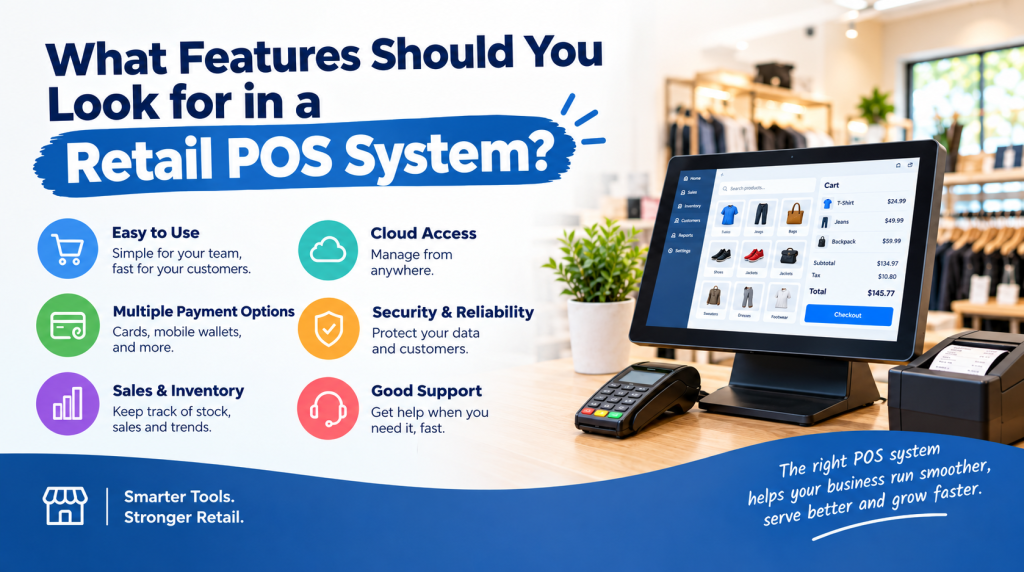
A good POS system should support reliable payment processing, accurate pricing, inventory visibility, flexible payment methods, returns, reporting, and integrations with the other systems the business uses.
Security should be another priority. Payment information must be handled using appropriate security practices and compliant payment technology.
The best POS system isn’t necessarily the one with the longest feature list.
It’s the one that makes everyday transactions easier, gives employees useful information, and helps customers move through the buying process without unnecessary friction.
Frequently Asked Questions
What is a retail POS system?
A retail POS system processes sales and payments while managing information such as products, prices, inventory, and transactions.
How does a POS system improve customer service?
It gives employees faster access to transaction, product, pricing, and inventory information, helping them assist customers more efficiently.
Can a POS system accept contactless payments?
Yes. Many modern POS systems support contactless card payments and mobile wallets through compatible payment terminals.
Does a POS system help with returns?
Yes. A POS system can store transaction records, making it easier for employees to locate purchases and process returns according to store policies.
Can USPayrun help businesses choose a POS solution?
Yes. USPayrun can help businesses evaluate their payment and POS requirements and identify solutions that fit their operations and customer needs.
Related US Payrun solutions
Questions about a POS system for your business? Call (860) 844-3611 or request a free trial.