
A cloud-based POS system is better for many modern retail businesses because it gives store owners remote access to business data, supports automatic updates, and makes it easier to manage connected operations. A traditional POS system works through locally installed software and hardware. The right choice depends on how your retail business operates, but cloud-based systems provide greater flexibility for retailers that need access to real-time information.
A POS system does much more than process payments. It records sales, manages products, tracks inventory, stores transaction data, and supports daily store operations.
The way that information is stored and accessed creates the main difference between a cloud-based POS and a traditional POS system.
Before choosing either option, retailers should understand how each system works and how it affects daily management, reporting, security, and business growth.
What Is a Cloud-Based POS System?
A cloud-based POS system stores and processes business data through remote cloud servers.
Store data is not limited to one computer at the business location. Authorized users can access the POS system and important business information through an internet-connected device.
This gives retailers access to information such as:
- Sales data
- Inventory levels
- Product performance
- Transaction records
- Employee activity
- Customer information
- Store reports
A cloud-based system keeps information connected across supported devices and locations.
For a retailer with multiple stores, this creates one central place to review business activity.
What Is a Traditional POS System?
A traditional POS system usually relies on software installed on a local computer or server at the business location.
The system stores important data locally. Store owners often need direct access to the POS terminal or local network to review and manage business information.
Traditional systems have served retail businesses for many years. They handle sales transactions and other essential store functions.
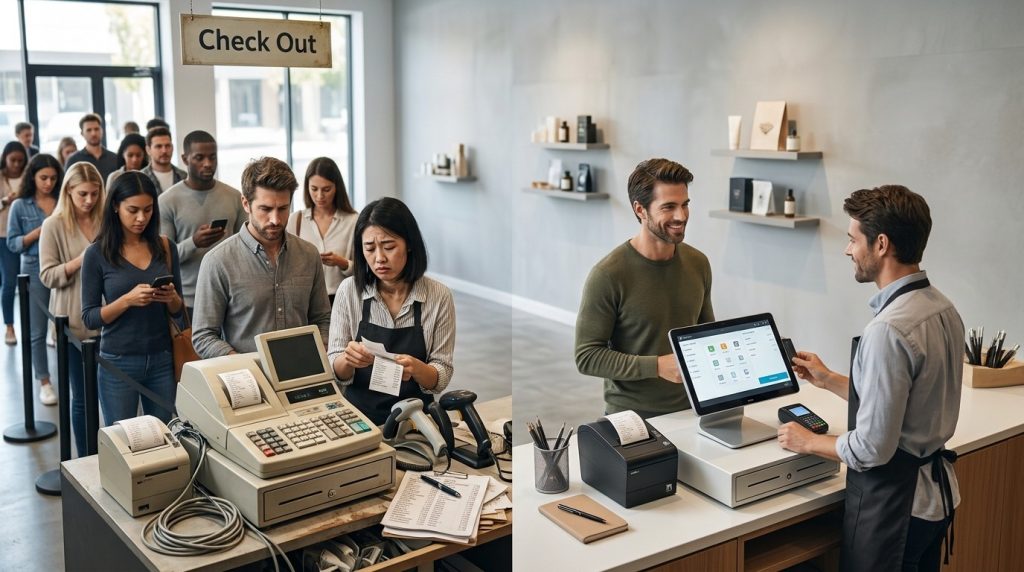
However, local systems often require more direct management. Software updates, backups, and system maintenance can place greater responsibility on the business.
The biggest difference is where the data lives and how easily the business can access it.
What Is the Main Difference Between Cloud-Based and Traditional POS?
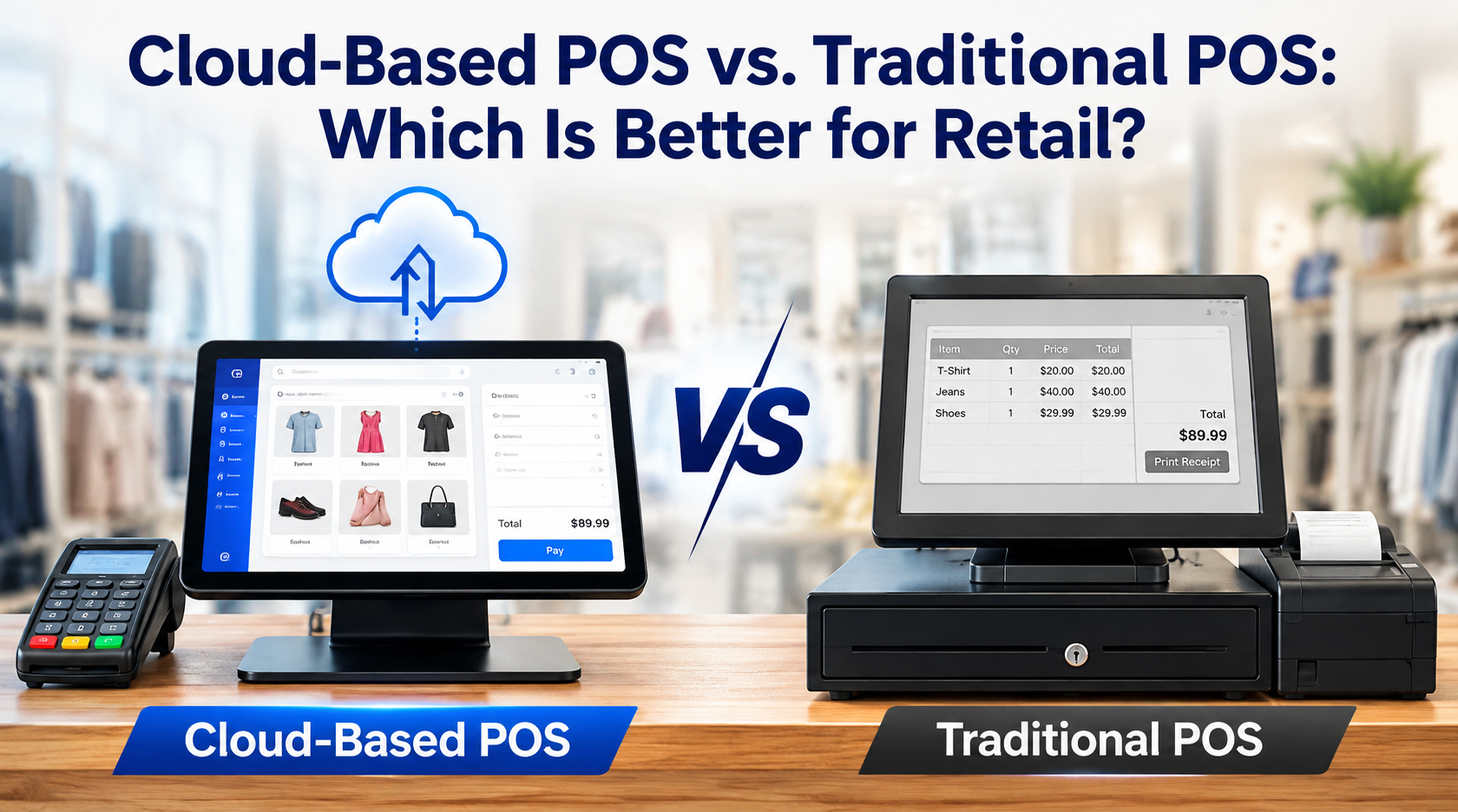
Cloud-based POS systems provide remote access to connected business data. Traditional POS systems mainly rely on locally installed software and hardware.
This difference affects how retailers manage their stores.
With a cloud-based POS, a store owner can review important information without standing behind the checkout counter. Authorized users can access the system from supported internet-connected devices.
With a traditional POS system, access is often more closely tied to the store location and its local hardware.
Cloud-based POS systems focus on flexibility and centralized access. Traditional POS systems focus on local installation and local data management.
Which POS System Gives You Better Access to Business Data?
A cloud-based POS system gives retailers better access to business data across supported locations and devices.
Retail owners do not spend every hour inside their stores. They may need to review sales after business hours, check inventory while meeting a supplier, or monitor performance across several locations.
Cloud-based access makes this easier.
A retailer can review current business information without relying on a single computer at one store.
This is especially useful for businesses with:
- Multiple retail locations
- Owners who manage stores remotely
- Managers working across different locations
- Online and physical sales channels
- Employees who need controlled access to specific information
Traditional systems can limit access to the local network or specific hardware.
For retailers that need greater visibility beyond one location, cloud-based technology offers a stronger advantage.
Which System Is Easier to Update?
Cloud-based POS systems are easier to keep updated because software updates are managed through the provider’s online platform.
POS software needs updates to improve features, address technical issues, and support changing business requirements.
With a traditional system, updates may require manual installation or direct work on the local system.
That creates extra work for the business.
Cloud-based software reduces this burden. Updates can be delivered through the online system instead of requiring every store to manage software installation separately.
This helps retailers spend less time managing technology and more time managing the business.
How Does a Cloud-Based POS Help Multi-Store Retailers?
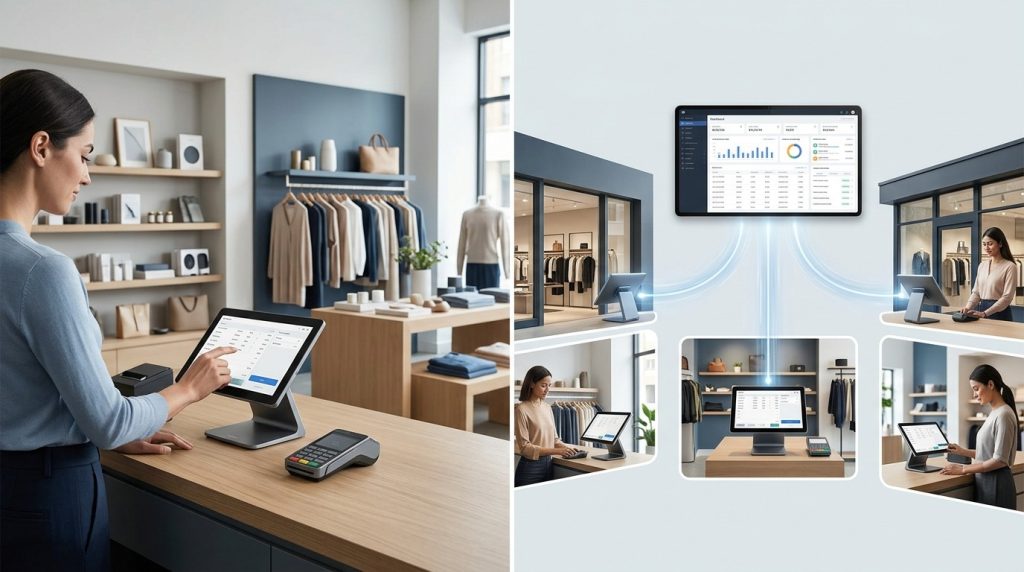
A cloud-based POS system gives multi-location retailers a central view of their operations.
Each store generates sales and inventory data throughout the day. Managing that information separately makes reporting more difficult.
A connected cloud-based system brings supported store information into one platform.
Store owners can compare:
- Sales by location
- Product performance
- Inventory levels
- Employee activity
- Store trends
- Overall business performance
This makes it easier to identify differences between locations.
For example, one product may sell quickly in one store and slowly in another. Centralized data helps the retailer see that difference and make better inventory decisions.
A traditional POS system often requires additional setup and management to create the same level of connected visibility.
Which POS System Is Better for Inventory Management?
A cloud-based POS system provides stronger flexibility for retailers that need centralized, real-time inventory visibility.
Inventory affects both sales and profitability.
When stores use disconnected systems, inventory information becomes harder to manage. One location may have excess stock while another location runs out of the same product.
A connected POS system helps retailers monitor inventory across supported sales channels and locations.
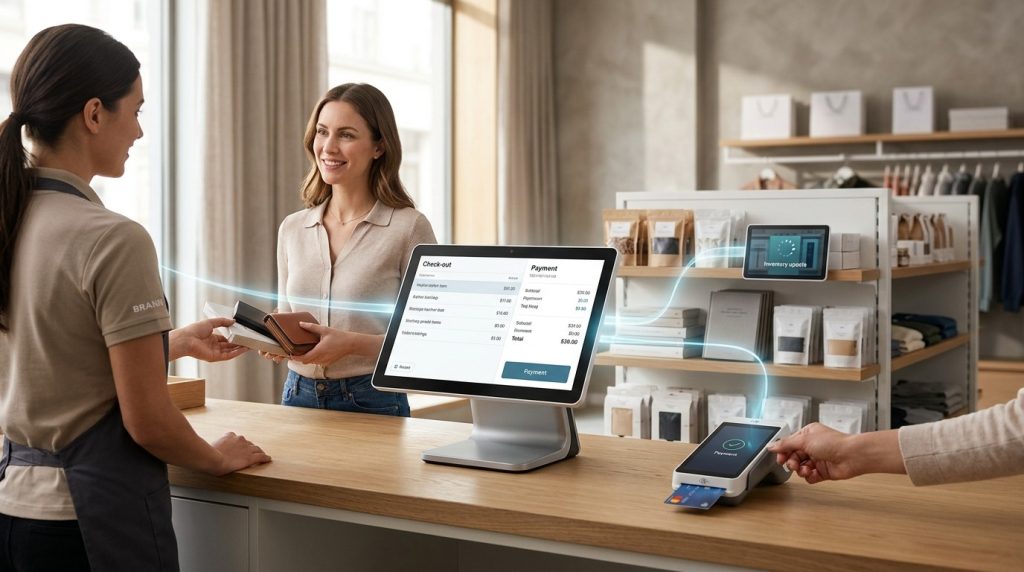
When a product is sold, the system records the transaction and updates the related inventory information.
This gives store owners a clearer picture of stock movement.
Better inventory visibility helps retailers:
- Identify low-stock products
- Review slow-moving inventory
- Monitor product sales
- Reduce unnecessary purchasing
- Improve stock planning
- Manage inventory across locations
The goal is not simply to store inventory data. The goal is to make that data useful for daily decisions.
How Do Cloud-Based POS Systems Support Retail Reporting?
Retail decisions depend on accurate information.
A cloud-based POS system collects transaction and operational data in one connected environment. Retailers can use reports to review sales performance and identify important business trends.
For example, store owners can examine which products perform well, when customer traffic increases, and how sales change over time.
This supports better decisions about inventory, promotions, staffing, and product selection.
Traditional POS systems provide reporting as well. The difference often comes down to access and data management.
Cloud-based reporting allows authorized users to review information without depending on one specific computer inside the store.
That gives business owners more flexibility when managing operations.
Is a Traditional POS System More Reliable?
Traditional POS systems have one clear advantage. Local systems can continue to operate within their own installed environment without depending on cloud access for every function.
However, reliability depends on more than whether a system is cloud-based or traditional.
Hardware quality, network setup, software configuration, backup procedures, and technical support all affect POS performance.
A cloud-based POS system depends on internet connectivity for full online functionality. Many modern POS providers include offline capabilities for specific transaction functions, depending on the system and configuration.
Retailers should understand exactly how their chosen POS system handles internet interruptions before making a decision.
The right question is not simply, “Which system is more reliable?”
The better question is, “How does this POS system support my business when a technical problem occurs?”
Which POS System Is Easier to Scale?
Cloud-based POS systems are generally better suited for retailers planning to add locations, users, devices, or sales channels.
Growth creates new operational needs.
A retailer may open a second store. The business may launch an online store or expand its product range. The POS system needs to support those changes.
Cloud-based systems are built around connected access and centralized data management. This makes expansion easier to manage.
Traditional POS systems often require additional local installation and configuration when the business adds new locations or hardware.
For a small store with one location and stable operations, that difference may have less impact.
For a growing retail business, flexibility becomes more important.
How Do the Costs Compare?
The cost structure differs between cloud-based and traditional POS systems.
Traditional POS systems often involve larger upfront expenses for locally installed software, servers, and specialized hardware.
Cloud-based POS systems commonly use a subscription-based pricing model. This spreads software costs over recurring payments.
Retailers should look beyond the initial price.
The total cost of a POS system includes:
- Hardware
- Software
- Payment processing
- Installation
- Updates
- Maintenance
- Technical support
- Additional users or locations
- Integrations
The cheapest system does not always create the best value.
A lower upfront price can become expensive when the system requires frequent maintenance or limits the way a business grows.
The best choice should match the store’s current needs and future plans.
How Do Cloud-Based POS Systems Handle Data Security?
Cloud-based POS providers use security measures to protect the systems and data they manage. Security practices depend on the POS provider and the services included with the platform.
Retailers should still take responsibility for their own security practices.
Strong passwords, controlled employee access, user permissions, secure devices, and proper staff training all play an important role.
A traditional POS system places more responsibility for local infrastructure and data management on the business.
Cloud-based systems shift parts of the technical management to the service provider.
Before selecting a POS provider, retailers should review security features, access controls, payment security requirements, and backup practices.
Can a Cloud-Based POS Connect Online and In-Store Retail?
Yes. A cloud-based POS system can connect supported online and physical retail operations through one central platform.
Modern customers shop through different channels.
They may browse products online and buy them in-store. They may check store availability before visiting a location. They may expect inventory information to remain accurate across every sales channel.
A disconnected system makes this harder to manage.
A connected POS helps bring sales and inventory information together. This gives retailers a clearer view of the entire business.
It also reduces the need to manage separate records for every sales channel.
For retailers selling both online and in person, connected operations can improve inventory visibility and simplify reporting.
When Is a Traditional POS System a Better Choice?
A traditional POS system can suit retailers with simple operations and limited technology requirements.
It may fit a business that:
- Operates from one location
- Does not need remote access
- Prefers locally installed systems
- Uses existing compatible hardware
- Has stable and simple POS requirements
However, the retailer should still consider future needs.
A system that fits the business today may create limitations later.
Before choosing a POS system, consider how the store will operate over the next several years. Growth, new locations, online sales, and changing customer expectations all affect the right technology choice.
When Is a Cloud-Based POS System a Better Choice?
A cloud-based POS system is a strong choice for retailers that want more flexibility and connected access to business information.
It is particularly useful for businesses that need:
- Remote access to store data
- Centralized reporting
- Connected inventory management
- Multi-location visibility
- Easier software updates
- Online and in-store integration
- Scalable technology
- Controlled access for different users
The system gives store owners more freedom to manage important information without being tied to one physical POS terminal.
That makes daily business management easier for retailers with more complex operations.
So, Which Is Better for Retail: Cloud-Based POS or Traditional POS?
A cloud-based POS system is the better choice for retailers that need flexibility, centralized data, remote access, and room to grow. A traditional POS system remains suitable for businesses with simple local operations and limited technology needs.
The decision should start with how your store operates.
Think about your number of locations, inventory needs, sales channels, reporting requirements, and future plans.
A POS system should help your business operate more efficiently. It should not create extra work or limit future growth.
Choose the Right Retail POS System With US Payrun
The right POS system gives you better control over the information that drives your retail business.
US Payrun is the owner and provider of its POS solutions, helping retailers manage sales, inventory, payments, reporting, and other daily operations through technology designed for retail businesses.
Whether you need a system for one store or a growing retail operation, choosing the right POS setup starts with understanding your business requirements.
Contact US Payrun today to discuss your retail POS needs and find a solution that supports the way your business operates today and where you plan to grow.
FAQs
Can I switch from a traditional POS to a cloud-based POS?
Yes. Existing product, inventory, and sales data can often be transferred during a planned migration.
Can cloud-based POS systems use receipt printers?
Yes. Many cloud-based POS systems support compatible receipt printers and other retail hardware.
Does every employee get full access to the POS system?
No. User permissions can restrict employees from viewing or changing sensitive business information.
Can a cloud-based POS accept gift cards?
Yes. Many retail POS systems support gift card sales and redemption through compatible features.
Does a cloud-based POS require special training?
Yes. Employees need basic training to process sales and use the system correctly.
Related US Payrun solutions
Questions about a POS system for your business? Call (860) 844-3611 or request a free trial.