
If you’re a business owner in Connecticut, you may be wondering: “What’s the difference between a POS system and POS software, and which one is right for my business?” This is a crucial question, as choosing the right tools can significantly impact how smoothly your operations run. In fact, small businesses report that using modern POS systems has improved their customer experience and operational efficiency. Let’s break it down so you can make the best decision for your business.
Understanding the Basics: POS System vs POS Software
Before diving into the nuances, it’s essential to know that a POS system and POS software are related but distinct components of the technology that powers your transactions.
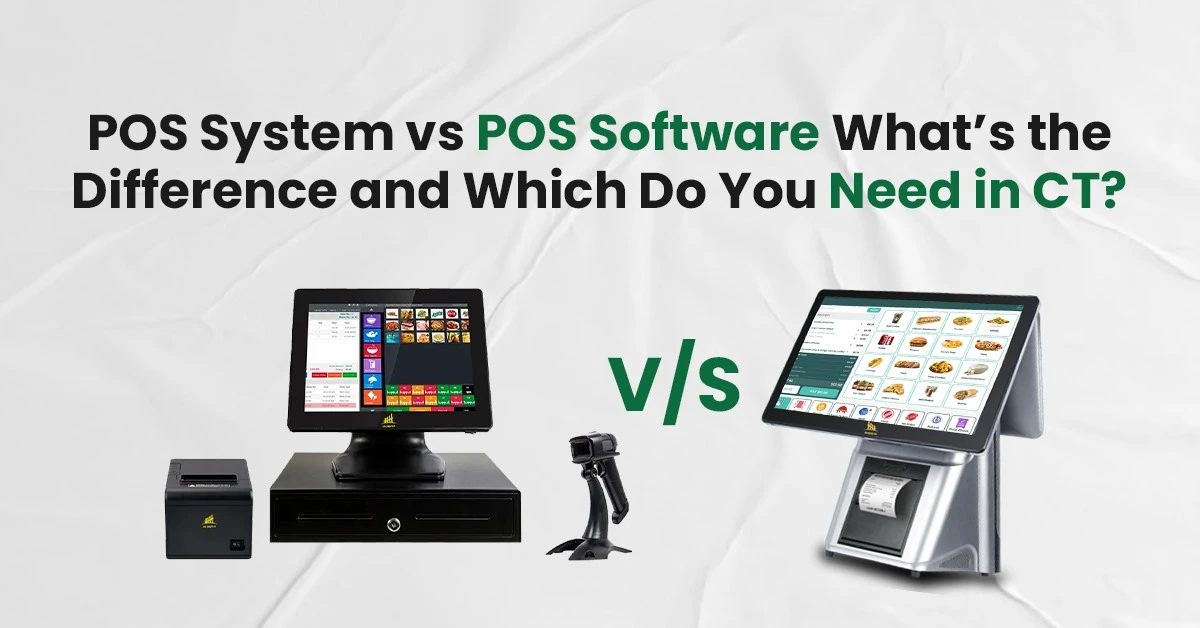
- POS System: A POS system refers to the complete hardware and software package that allows businesses to process transactions. It typically includes a combination of physical devices like registers, barcode scanners, cash drawers, receipt printers, and the software that powers them.
- POS Software: In contrast, POS software refers to the software component that handles the sales process, tracks inventory, manages customer data, and generates reports. The software is the brain behind the POS system.
In short, a POS system is the entire setup (hardware and software), while POS software is a crucial part of that system, focusing specifically on managing the business operations.
How Does a POS System Benefit Your Connecticut Business?
For Connecticut-based businesses, choosing between a POS system and POS software can be tricky, especially with varying regulations and consumer demands. Here’s why you should carefully consider both:
1. Streamlined Transaction Processing
Whether you’re in Hartford, New Haven, or Stamford, one thing’s clear: Connecticut consumers expect quick and seamless transactions. A POS system provides the physical hardware and software to make that happen. The combination of an intuitive interface and secure payment processing options, such as EMV chip cards and contactless payments, can enhance the customer experience significantly.
2. Inventory and Sales Management
A great POS system helps you stay on top of your inventory. The POS software component tracks your stock, alerts you when it’s time to reorder, and even syncs with your e-commerce site. For Connecticut retailers, especially those with multiple locations or a growing online presence, having centralized control over stock levels is invaluable.
3. Reporting and Analytics
POS systems generate valuable data, and the POS software analyzes that data. This allows you to generate detailed reports on sales trends, top-performing products, customer preferences, and more. With this insight, Connecticut businesses can make smarter decisions to boost profitability and streamline operations.
4. Legal Compliance in Connecticut
Connecticut has its own set of tax regulations, which businesses must follow. The POS software often comes with automated tax calculation tools, ensuring that your transactions are compliant with local tax laws. For businesses in industries like food service or retail, this feature can save time and prevent costly errors.
Why Does It Matter to Choose the Right POS Solution for Your Business?
Choosing the right POS system or POS software is critical for several reasons:
- Scalability: Connecticut small businesses looking to grow can benefit from flexible POS systems that scale with their needs. A simple setup may work for a local coffee shop, while a more advanced system may be necessary for a multi-location business.
- Customer Satisfaction: Quick, error-free transactions lead to happier customers. A seamless POS system ensures your customers’ experience is smooth from start to finish, which can directly impact loyalty.
- Business Efficiency: A well-integrated POS software reduces manual tasks such as inventory tracking, tax reporting, and payroll processing, allowing you to focus on running your business.
Frequently Asked Questions (FAQs)
What is the main difference between a POS system and POS software?
A POS system includes both the hardware (registers, scanners, printers) and software (transaction management, inventory tracking), while POS software is specifically the software part of the system.
Can I use POS software without a full POS system?
Yes, many businesses choose to use POS software on existing devices like tablets or laptops, but they may miss out on the full hardware integration offered by a complete POS system.
Is POS software cloud-based?
Many modern POS software solutions are cloud-based, which allows business owners to access data remotely and ensures real-time updates across multiple locations.
Do I need to buy both a POS system and POS software separately?
No, most vendors offer an integrated POS system that includes both hardware and POS software, simplifying the process for business owners.
How long does it take to set up a POS system for my business?
Setup time depends on the complexity of the system. Typically, it takes anywhere from a few hours to a couple of days to set up a POS system and POS software.
The Right POS System Is Key to Your Success in Connecticut
Choosing between a POS system and POS software is a vital decision for Connecticut business owners. A POS system provides everything you need to process payments and manage operations efficiently, while POS software powers those operations with in-depth insights and reporting capabilities. By selecting the right solution, you’ll improve your transaction process, manage your inventory, and boost customer satisfaction
Reach out today to learn more about how we can help enhance your business operations!